
carnival in tenerife
The Carnival of Santa Cruz de Tenerife is one of the largest carnivals in the world — for two-plus weeks every year the capital becomes a round-the-clock open-air party of costumes, Latin orchestras, satirical choirs and parades, drawing hundreds of thousands of people into the streets.
Dates move with the Lent calendar (the big week usually lands between late January and early March). This page is the evergreen guide — what happens, where, and how to plan — and every confirmed Carnival event appears in the list below as soon as the season’s programme is published.

What actually happens at the Santa Cruz Carnival
The official programme runs on stage at the Recinto Ferial and around Plaza de España: the spectacular Gala for the Election of the Carnival Queen (costumes weighing more than the wearers), contest nights for murgas — the satirical singing troupes that roast politicians — and comparsas, the dance groups that bring the Brazilian-style drums and feathers.
The street carnival is the half most visitors come for: after the opening cavalcade, the centre of Santa Cruz fills nightly with stages, Latin orchestras and dance floors that run until sunrise. The Coso Apoteosis — the grand closing parade along Avenida Marítima — and the Entierro de la Sardina, a mock funeral where the city “buries” a giant cardboard sardine amid wailing widows in drag, are the two set-piece days everyone plans around.
Daytime has its own institution: the Carnaval de Día weekends turn the streets into family-friendly daytime parties with live bands — the easiest way to experience Carnival with kids or without an all-nighter.
Puerto de la Cruz — the island’s second carnival
Puerto de la Cruz in the north runs its own full Carnival with galas, street verbenas and a cult one-off: the Mascarita Ponte Tacón, a high-heels race in drag down the old town’s streets that has become one of the most photographed events on the island. If you are staying in the north, you don’t need to commute — Puerto’s programme stands on its own.
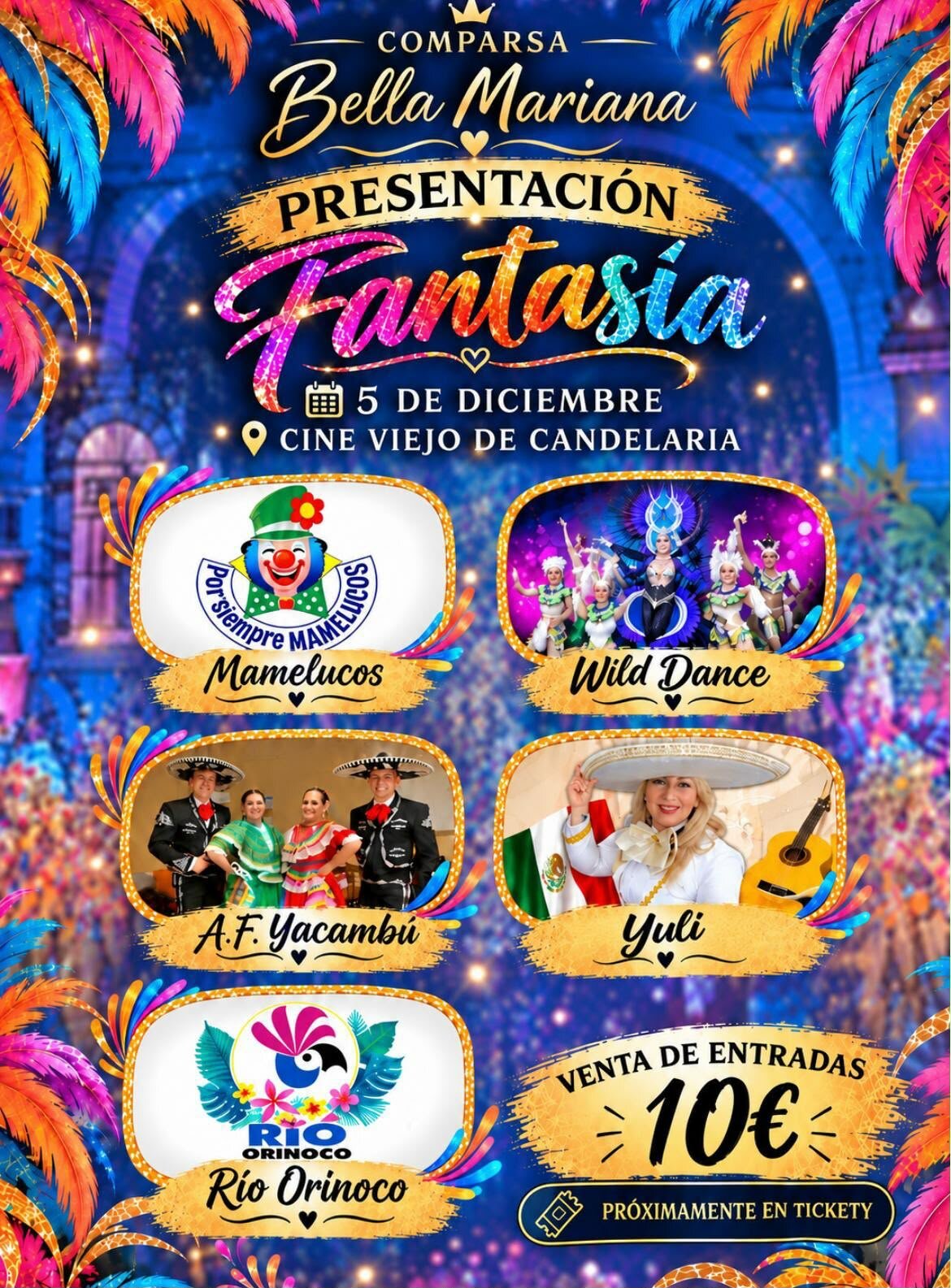
Most other municipalities — La Laguna, Los Cristianos (Arona), Candelaria and more — hold their own smaller carnival weeks in the days before or after Santa Cruz, so the season effectively lasts a month across the island.
Practical tips: dates, costumes, getting around
Book accommodation in Santa Cruz early — Carnival week is the city’s peak occupancy of the year. A costume is not optional for the night-time street parties: locals dress up, and you will feel more out of place without one than in the most improvised outfit.
The tram between Santa Cruz and La Laguna and TITSA buses usually run reinforced late-night services during the main days — check the current schedules when the dates are announced. Driving into the centre on gala and parade nights is best avoided entirely.
Frequently asked questions
When is the Carnival of Santa Cruz de Tenerife?
The dates change every year because Carnival is tied to the Lent calendar: the main week usually falls between late January and early March, ending on the weekend after Ash Wednesday with the Piñata. As soon as each season’s official programme is published, the confirmed events appear in the list on this page.
Is the Tenerife Carnival free?
The street carnival — the nightly open-air parties, the Coso parade and the Entierro de la Sardina — is completely free. The staged galas and contests at the Recinto Ferial (Queen’s Gala, murga finals) are ticketed and sell out fast.
Where does the Carnival take place?
The heart of it is central Santa Cruz: Plaza de España, Avenida de Anaga and the Recinto Ferial for staged events. Puerto de la Cruz runs the island’s second-biggest programme, and most municipalities hold their own smaller carnival weeks around the same dates.
Do I need a costume?
For the night-time street parties — practically yes. Dressing up is the point: locals of every age come in costume, and even a simple wig or themed outfit changes the experience. For daytime parades and the family-oriented Carnaval de Día, regular clothes are fine.